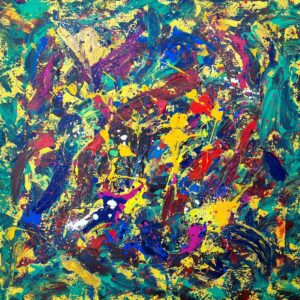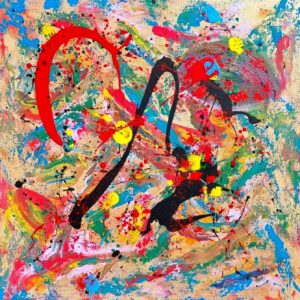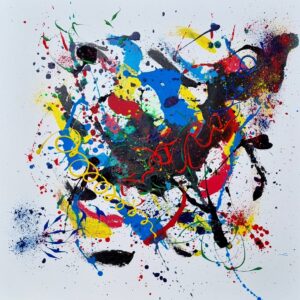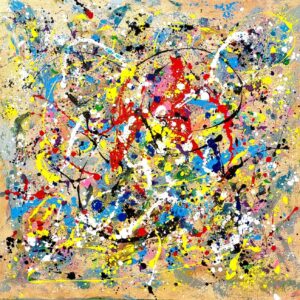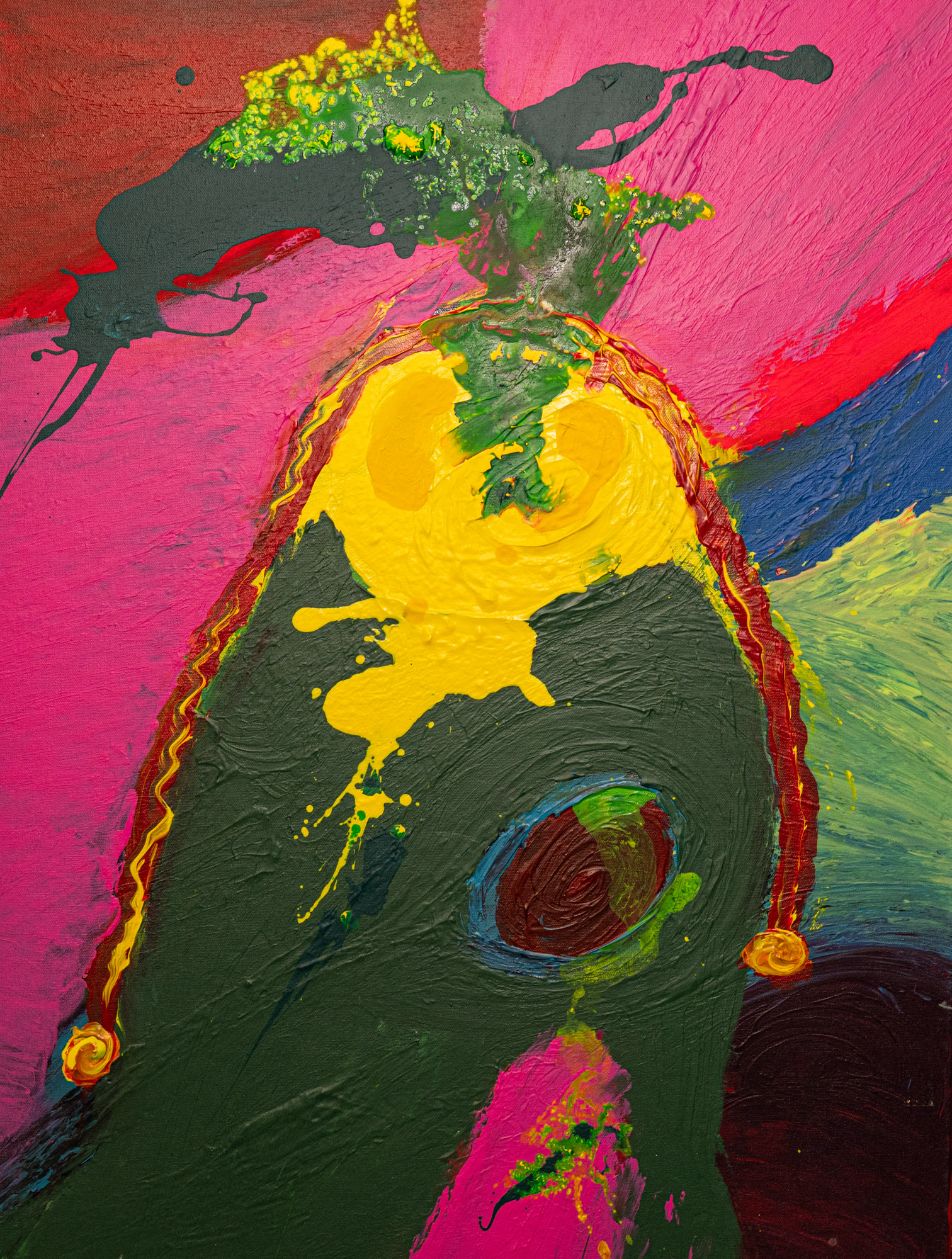
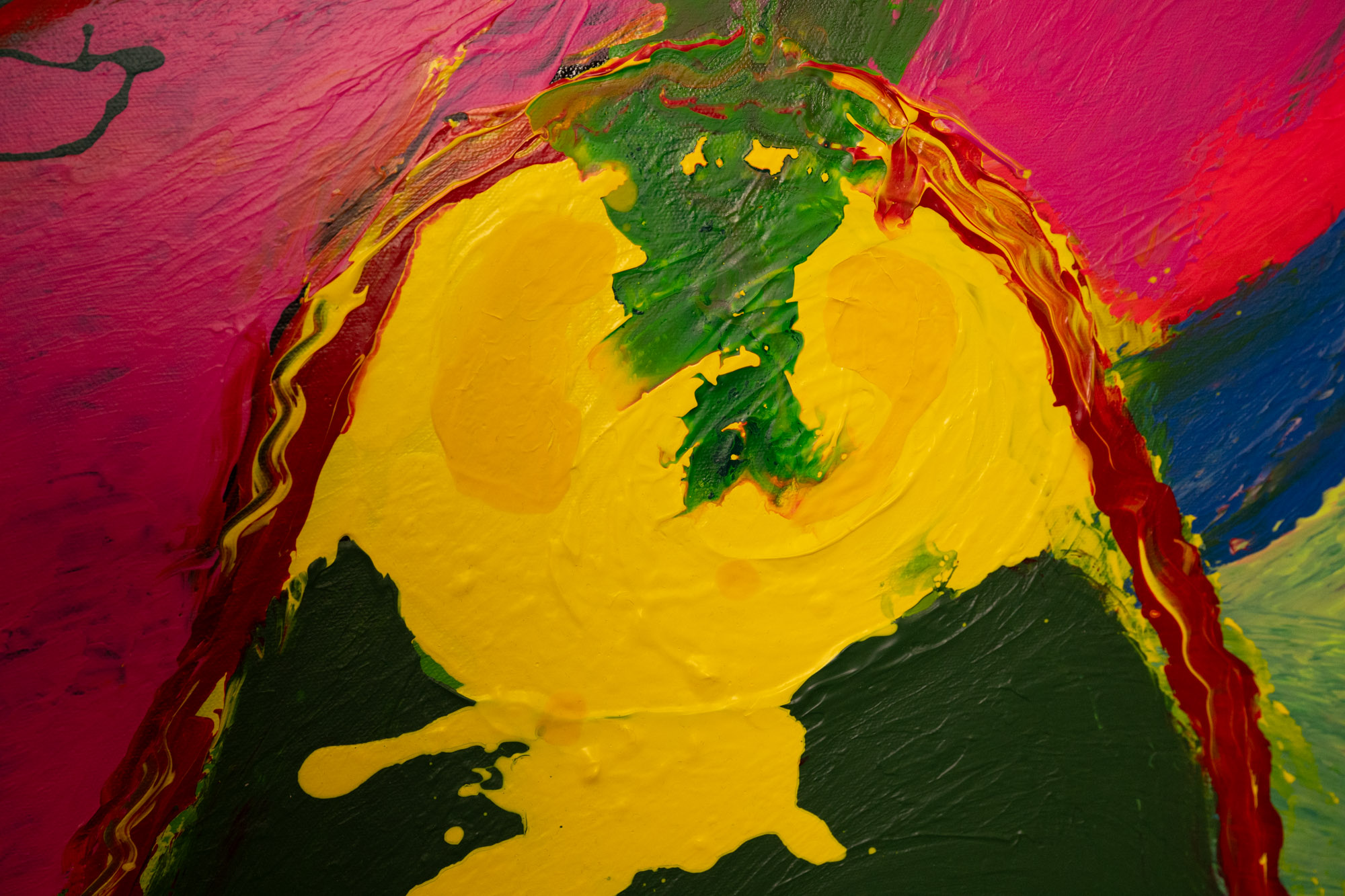

The Matrioshka series emerges from an intimate and ongoing exploration of identity as a layered, shifting, and often fragmented construct. Inspired both by the symbolic structure of the matrioshka doll and by the literary universe of the novel Matrioshka Woman by R.C. Anaider, this body of work reflects the idea that the self is never singular, but composed of multiple inner versions — memories, wounds, silences, and transformations that coexist within the same being.
In these paintings, the figure becomes a vessel rather than a portrait. Faces are partially erased, blurred, or entirely absent, suggesting not a loss of identity, but a state of transition — a space where the self is continuously dissolving and re-forming. The absence of defined features allows emotion to take precedence over representation, inviting the viewer to project, to feel, and to recognize fragments of their own inner world.
The recurring presence of the feminine figure, often echoing different stages of life, reflects a temporal and emotional journey — from childhood to maturity, from innocence to awareness, from silence to expression. These figures do not exist independently, but as echoes of one another, like nested identities unfolding from within.
Color plays a central role in this process. It acts as both concealment and revelation — covering, protecting, but also exposing what cannot be articulated through form alone. The use of luminous tones, particularly yellow, introduces a subtle but persistent presence of light, symbolizing resilience, inner warmth, and the possibility of reconstruction even in states of fragmentation.
Extending the philosophical inquiry developed in her novel into a visual language, this series does not seek to define identity, but to question it — to explore how much of who we are is remembered, inherited, hidden, or yet to be discovered.
Ultimately, the Matrioshka series is not about what is seen, but about what remains — the quiet, layered essence of the self that resists fixed form.